<?xml version="1.0" encoding="UTF-8"?>
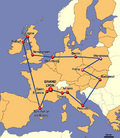
<!--Generated by Squarespace Site Server v5.0.0 (http://www.squarespace.com/) on Fri, 05 Dec 2008 08:21:55 GMT--><feed xmlns="http://www.w3.org/2005/Atom" xmlns:dc="http://purl.org/dc/elements/1.1/"><title>e-urban Agenda-Archive</title><subtitle>Agenda Archive</subtitle><id>http://e-urban.squarespace.com/agenda-archive/</id><link rel="alternate" type="application/xhtml+xml" href="http://e-urban.squarespace.com/agenda-archive/"/><link rel="self" type="application/atom+xml" href="http://e-urban.squarespace.com/agenda-archive/atom.xml"/><updated>2007-03-01T21:41:28Z</updated><generator uri="http://www.squarespace.com/" version="Squarespace Site Server v5.0.0 (http://www.squarespace.com/)">Squarespace</generator><entry><title>2007.03.21 SEVILLA Conferencia Europea de Ciudades y Pueblos Sostenibles [ES]</title><id>http://e-urban.squarespace.com/agenda-archive/20070321-sevilla-conferencia-europea-de-ciudades-y-pueblos-sostenibles-es.html</id><link rel="alternate" type="text/html" href="http://e-urban.squarespace.com/agenda-archive/20070321-sevilla-conferencia-europea-de-ciudades-y-pueblos-sostenibles-es.html"/><author><name>Huib Riethof, editor</name></author><published>2007-03-21T01:51:47Z</published><updated>2007-03-21T01:51:47Z</updated><content type="html" xml:lang="fr-FR"><![CDATA[<p>&nbsp;<span class="full-image-float-none"><img src="http://e-urban.squarespace.com/storage/sevilla2007.jpg" alt="sevilla2007.jpg" /></span>La sostenibilidad urbana es el corazón de las esfuerzas para el desarrollo dos barrios bajos. Los Compromisos de Aalborg entrarán a las calles tras nuestra acción concreta. Recomendamos la vuestra participación a la conferencia sevillana:<br /></p><blockquote><h4>Llevando los compromisos&nbsp;a las Calles</h4><p><font size="2" face="Verdana, Geneva, Arial, Sans-serif"><strong>Quinta Conferencia Europea de Ciudades y Pueblos Sostenibles</strong></font> </p><p><font size="2" face="Verdana, Geneva, Arial, Sans-serif"><strong>21-24 de Marzo de 2007, Sevilla, Espa&ntilde;a</strong></font> </p><p>Unase a la conferencia para reunirse con&nbsp;mas de 1000 delegados comprometidos con la sostenibilidad.&nbsp; La conferencia se apoya&nbsp;en el exito de los Gobiernos Locales europeos para reunirse, intercambiar y&nbsp;comprometerse nconcretamente para el avance d ela sostenibilidad en europa. Esta conferencia constituye una continuación de la serie de conferencias albergadas en Aalborg 1994, Lisbon 1996, Hannover 2000, and <a href="http://www.aalborgplus10.dk/" target="_blank">Aalborg 2004</a>.&nbsp; </p><p>Consiga una visión de los progresos y los &eacute;xitos en sostenibilidad local en Europa y de&nbsp;la implementación de los Compromisos de Aalborg y la Carta de Aalborg, y aprenda cómo fomentar la sostenibilidad en su ciudad o pueblo. </p><p>Descubra las más recientes herramientas e instrumentos dise&ntilde;ados que pueden ayudar a su ciudad o pueblo en los esfuerzos para acelerar la sostenibilidad. </p></blockquote>      <p>&nbsp;La <a class="offsite-link-inline" target="_blank" href="http://www.aalborgplus10.dk/media/charter_spanish.pdf">Carta de las ciudades europeas hacia la sostenibilidad</a> (PDF), tal como fue aprobada el 27 de mayo 2004 en Aalborg (Dinamarca), contiene compromisos en cuanto:</p><ul><li>los desequilibrios arquitectónicos, sociales, economicos, politicos, ambientales e de recursos naturales <br /></li><li>la sostenibilidad como proceso creativo local en busca del equilibrio</li><li>justicia social para urbano sostenibilidad</li><li>la autogestión a nivel local como condición necessaria</li><li>la participación de la comunidad.</li></ul><p>Nuestra selección de los compromisos de Aalborg reflega los dominios más importantes de la contribución&nbsp; dos &quot;urban practitioners&quot; para la sostenibilidad urbana.&nbsp;</p><p><em>Inscrípción por correo electrónico o fax. Descargue el formulario de inscripción: </em><a href="http://www.sevilla2007.org/fileadmin/user_upload/ITC/sevilla_2007/Registration_form_en.doc"><em>English</em></a><em> | </em><a href="http://www.sevilla2007.org/fileadmin/user_upload/ITC/sevilla_2007/Final_Registration_form_sp.doc"><em>Espa&ntilde;ol </em></a><em>| </em><a href="http://www.sevilla2007.org/fileadmin/user_upload/ITC/sevilla_2007/Final_Registration_form_IT.doc"><em>Italiano</em></a><em> | </em><a href="http://www.sevilla2007.org/fileadmin/images/ITC/sevilla2007/Registration_form_fr.pdf"><em>Fran&ccedil;ais</em></a><br /><em><em>&nbsp;Por favor, siga las instrucciones en el formulario&nbsp;para inscribirse<font color="#000000" style="color: rgb(0, 0, 0);">.</font></em></em></p><p>(Disculpate, por favor, mio Castella&ntilde;o)&nbsp;</p><p> </p>]]></content></entry><entry><title>2007.02.22 LYON: Regenera Conférence finale [FR]</title><category>Agenda - Anciennes notes [FR]</category><id>http://e-urban.squarespace.com/agenda-archive/2007/2/22/20070222-lyon-regenera-confrence-finale-fr.html</id><link rel="alternate" type="text/html" href="http://e-urban.squarespace.com/agenda-archive/2007/2/22/20070222-lyon-regenera-confrence-finale-fr.html"/><author><name>Huib Riethof, editor</name></author><published>2007-02-22T22:46:25Z</published><updated>2007-02-22T22:46:25Z</updated><content type="html" xml:lang="fr-FR"><![CDATA[<h3>Conf&eacute;rence Finale du R&eacute;seau REGENERA </h3>   <p><strong> Échange d&rsquo;exp&eacute;rience sur la r&eacute;g&eacute;n&eacute;ration urbaine en Europe<br />  Lieu, date: </strong>Lyon, 22-23 f&eacute;vrier 2007 </p>  <img src="http://e-urban.squarespace.com/storage/RegeneraBanner7121.jpg?__SQUARESPACE_CACHEVERSION=1169421103109" alt="RegeneraBanner7121.jpg" />  <h3><strong>Informations</strong></h3><p> Regenera est un des r&eacute;seaux th&eacute;matiques de villes europ&eacute;ennes qui sont anim&eacute;s par URBACT. La conf&eacute;rence publique, o&ugrave; les produits des voyages d'&eacute;tudes et des documents fournis par les villes participantes seront pr&eacute;sent&eacute;s, se tiendra dans la Ville animatrice du r&eacute;seau: Grand Lyon. (Infos pratiques &agrave; la fin de cet article-ci.)<br /> </p>   <p>La conf&eacute;rence est structur&eacute;e en deux sessions pl&eacute;niaires, une au d&eacute;but de la rencontre et l'autre &agrave; sa fin. Cinq Ateliers se tiendront le mercredi apr&egrave;s-midi et le matin de jeudi. Experts et op&eacute;rateurs de terrain des villes qui se sont investies dans certains volets de l'&eacute;tude du r&eacute;seau, y partageront leurs exp&eacute;riences:<br />   </p>       <p> </p>   <ul>  <li><strong>Atelier 1 : </strong> Le projet urbain. Discussion entre architectes et habitants sur <strong>trois projets architecturaux</strong> dans les quartiers des villes de REGENERA.</li>   <li><strong>Atelier 2 : </strong> La <strong>diversit&eacute; culturelle</strong> : des approches pragmatiques des villes</li>   <li><strong>Atelier 3 : </strong> L&rsquo;importance des <strong>projets de m&eacute;diation</strong> dans le d&eacute;veloppement des quartiers en r&eacute;g&eacute;n&eacute;ration urbaine.</li>   <li><strong>Atelier 4 : </strong> La place de <strong>l&rsquo;&eacute;ducation</strong> dans les projets de r&eacute;g&eacute;n&eacute;ration urbaine</li>   <li><strong>Atelier 5 : </strong> Organiser des projets transversaux : <strong>Le m&eacute;tier de chefs de projet</strong> dans diff&eacute;rentes villes europ&eacute;ennes</li>  </ul>   <h3><strong>Le r&ocirc;le des chefs de projet urbain: un sujet principal</strong></h3><blockquote><p> L'atelier 5, notamment, retient notre attention: <strong>La place centrale des op&eacute;rateurs de projets dans les quartiers urbains en cours de red&eacute;veloppement et de transformation</strong>, y sera c&eacute;l&eacute;br&eacute;e. Regenera s'y occupe, &agrave; notre avis, d'un noeud vital (et en m&ecirc;me temps un des plus fragiles) dans la r&eacute;novation urbaine. Car la seule approche effective et durable est la transversale: Sans elle, les projets risquent d'&ecirc;tre ineffectifs, ou m&ecirc;me contraproductifs. </p><p><strong>Le chef de projet et son &eacute;quipe constituent les seuls garants possibles d'une v&eacute;ritable transversalit&eacute;.</strong> - Naturellement, rien n'y va sans un appui durable (pendant le projet) des &eacute;lus et leurs secteurs de gestion, tandis que la composition et le poids du partenariat jouent &eacute;galement un r&ocirc;le d&eacute;cisif. - Mais le personnel, les op&eacute;rateurs locaux qui animent la participation de la population et des usagers de la conscription concern&eacute;e, en sont le vecteur principal.</p><p>Ce sera une occasion de taille pour l'animation du d&eacute;bat public sur le r&ocirc;le des professionnels, qui sont au coeur d'e-urban, devant une audience de taille. L'Europe, via URBACT, &eacute;coutera, mais aussi les &eacute;lus locaux et, les chercheurs scientifiques ainsi qu'un nombre important de coll&egrave;gues de plusieurs pays de l'EU. Le besoin de transversalit&eacute;, ressenti par quasi chacun dans notre domaine, et dont le manque, h&eacute;las trop fr&eacute;quent, entame nos r&eacute;sultats si souvent, se pr&ecirc;te parfaitement &agrave; situer mieux le r&ocirc;le central et l'instrumentarium n&eacute;cessaire des op&eacute;rateurs de terrain!</p></blockquote>         <h3><strong><span class="thumbnail-image-float-left"><a href="http://e-urban.squarespace.com/display/ShowImage?imageUrl=%2Fstorage%2Fregeneramap6531.jpg&imageTitle=444887-351684-thumbnail.jpg" onclick="window.open(this.href, '_blank', 'width=444,height=512,scrollbars=no,resizable=no,toolbar=no,directories=no,location=no,menubar=no,status=no'); return false;"><img alt="444887-351684-thumbnail.jpg" src="http://e-urban.squarespace.com/storage/thumbnails/444887-351684-thumbnail.jpg" /></a><br /><span class="thumbnail-caption" style="width: 120px;">Regenera r&eacute;seau | network (&deg;Urbact)</span></span>La Haye: Approche 'pragmatique' de la diversit&eacute; culturelle</strong></h3><blockquote><p> J'ai particip&eacute; &agrave; deux visites d'&eacute;tudes des &eacute;quipes Regenera (accompagnement scientifique/praticiens), &agrave; la ville de La Haye (d&eacute;cembre 2005) et &agrave; Budapest (mars 2006). (Voir rapportages dans le <a href="http://e-urban.squarespace.com/journal-by-date/">Journal - liste de postes</a>, de d&eacute;cembre 2005 et de mars-avril 2006)<br /> </p><p>Je compte pouvoir v&eacute;rifier ou corriger certaines impressions et observations que j'y ai pu faire, dans les Ateliers o&ugrave; ces villes-l&agrave; se produiront.<br />  </p></blockquote> <p><strong>La Haye</strong> animera l'Atelier 2, avec son approche 'pragmatique' de la <strong>politique de sant&eacute; </strong>via la promotion de petites initiatives de m&eacute;dication traditionnelle, compl&eacute;mentaires &agrave; la m&eacute;decine g&eacute;n&eacute;rale, anim&eacute;es par les immigr&eacute;s eux-m&ecirc;mes.') Une approche qui s'inscrit dans la tradition locale, originaire du pass&eacute; de la ville comme lieu d'accueil de nombreux gens des Indes n&eacute;erlandaises (l'Indon&eacute;sie actuelle), aussi bien de gens du pays que de n&eacute;erlandais d'origine mixte et de N&eacute;erlandais 'indis&eacute;s'. </p> <blockquote><p>L'approche de La Haye est bas&eacute;e sur une confiance et un respect mutuels entre la Ville et les organisations volontaires des gens en question. Elle s'inscrit dans le syst&egrave;me de gouvernance que les Hollandais avaient d&eacute;velopp&eacute; dans leur ancienne colonie des Indes. </p><p><span class="sizeLess20">Celui-l&agrave; &eacute;tait caract&eacute;ris&eacute; par une balance d&eacute;licate entre le monde dominant des colonisateurs europ&eacute;ens d'un c&ocirc;t&eacute;, et l'autogouvernance indig&egrave;ne de l'autre. Notamment sur &Icirc;le de Java, le monde indon&eacute;sien avait conserv&eacute; ses anciennes structures de gouvernance par des princes, des sultans et de nobles locaux. La stabilit&eacute; de la domination des derniers sur leurs sujets a &eacute;t&eacute; troqu&eacute;e contre une politique de quasi non-ing&eacute;rence de la part des Hollandais. Cet &eacute;quilibre-l&agrave; s'est maintenu pendant environ un si&egrave;cle, avant d'&ecirc;tre balay&eacute; par la lutte pour l'ind&eacute;pendance de ce vaste pays en 1945-47.</span><br /></p><p> Le syst&egrave;me de gouvernance n&eacute;erlandais, de son c&ocirc;t&eacute;, permet encore toujours un tel communautarisme (il a &eacute;t&eacute; construit l&agrave;-dessus, d&egrave;s ses d&eacute;buts au XVIme si&egrave;cle), mais de l'analyse de ce cas de communautarisme int&eacute;gr&eacute; de la ville de La Haye, r&eacute;sultera aussi une notion de ses limites: Ce syst&egrave;me a souvent &eacute;chou&eacute; dans les situations, o&ugrave; il est question d'immigration massale de travailleurs non-europ&eacute;ens et de leurs familles d'origine rurale (les Turcs et les Marocains apr exemple, qui ont beaucoup de mal &agrave; comprendre la fa&ccedil;on pragmatique d'interpr&eacute;tation des lois, des r&egrave;gles et de l'autorit&eacute;, l'interpr&eacute;tation sp&eacute;cifique des Hollandais de la tol&eacute;rance). Pour eux, l'autogestion en douce qui leur est propos&eacute;e, ne rencontre pas une structure d'accueil dans leur communaut&eacute;.<br /> </p><p><strong>Quelle le&ccedil;on, donc, &agrave; apprendre de La Haye?</strong>&nbsp;</p><p>Il y est question d'une  approche vraiment pragmatique, adapt&eacute;e aux us et coutumes locaux n&eacute;erlandais, mais pratiquable seulement avec certaines cat&eacute;gories d'immigr&eacute;s (les Chinois, certaines groupes d'Antillais et de Surinamiens, ainsi qu'avec le monde 'Indo', sauf une grande partie des Moluquois, qui sont comparable aux Harkis en France). Ce qui ne limite pas son int&eacute;r&ecirc;t pour l'animation &eacute;mancipatrice, n&eacute;cessaire dans les quartiers urbains. </p><p>Le capital de la capitalisation de l'exp&eacute;rience urbaine accumul&eacute;e, r&eacute;colt&eacute; par les soins admirables d'URBACT, n'est h&eacute;las pas aussi facilement r&eacute;investissable qu'un capital mon&eacute;taire le serait. Il sera un 'm&eacute;ta-capital', comprenant essentiellement des m&eacute;thodes et des pistes de <a href="http://e-urban.squarespace.com/urbipedia/2006/1/28/diagnosis.html">diagnostic</a>*) et d'&eacute;valuation, propres &agrave; l'intervention &eacute;mancipatrice urbaine. Il sera mis &agrave; l'oeuvre comme on g&egrave;re les 'micro-cr&eacute;dits', avec un accompagnement qui sera orient&eacute; par un dialogue permanent, durable, entre les tenants du capital et les receveurs, qui le renouvelleront chaque fois avec l'investissement de leurs savoirs pratiques.<br /> </p><p>Car, dans notre profession, il s'agit toujours de solutions uniques, d'arrangements de petite &eacute;chelle. Et nous ne nous devrions pas permettre d'en n&eacute;gliger certaines, puisqu'elles ne soient pas g&eacute;n&eacute;ralement transf&eacute;rables en tant que 'best practices'.<br />Ce qui est le meilleur pour les uns, risque d'&ecirc;tre le pire pour certains autres!</p></blockquote><p>-----------------------------&nbsp;</p><blockquote><p>&nbsp;&nbsp;&nbsp; <span class="sizeLess20">') Sant&eacute;, r&eacute;forme n&eacute;erlandaise des soins de 2005/2006, voir <a href="http://e-urban.squarespace.com/journal/">e-urban Journal</a>, dans:</span></p><ul><li><span class="sizeLess20"><a href="http://e-urban.squarespace.com/journal/2006/1/4/regenera-health-the-hague-care-insurance-privatization-en-4106.html">Regenera Health: Care Insurance Privatisation [EN] (04.1.06)</a>, </span></li><li><span class="sizeLess20"><a href="http://e-urban.squarespace.com/journal/2006/2/13/regenera-apprendre-la-haye-fr-13206.html">Regenera: Apprendre &agrave; La Haye (13.2.06) [FR]</a></span></li><li><span class="sizeLess20"><a href="http://e-urban.squarespace.com/journal/2006/2/13/regenera-the-hague-learning-points-en-13206.html">Regenera: The Hague Learning Points (13.2.06) [EN] (by Regenera project secretary Alexander Wagner, Lyon)</a></span></li><li><span class="sizeLess20"><a href="http://e-urban.squarespace.com/journal/2006/5/24/regenera-sant-la-haye-une-caisse-maladie-saisit-la-cour-europenne-fr.html">Regenera Sant&eacute;: Une caisse-maladie saisit la Cour europ&eacute;enne (24.5.06) [FR]</a></span></li><li><span class="sizeLess20"><a href="http://e-urban.squarespace.com/journal/2006/5/31/regenera-gezondheidszorg-verzekeraars-weigeren-patinten-nl.html">Regenera Gezondheidszorg: Verzekeraars weigeren pati&euml;nten (31.5.06) [NL]</a></span><br /></li></ul><p>&nbsp;&nbsp;&nbsp; <span class="sizeLess20">*) <a href="http://e-urban.squarespace.com/urbipedia/2006/1/28/diagnosis.html">Diagnostic</a>: Cliquer pour lire ce poste dans l'UrbiPedia d'e-urban (en Anglais) ...</span><br />&nbsp;</p></blockquote>   <p>Nous reviendrons sur les projets de <strong>Budapest</strong>, dans un article dans le Journal.</p>   <p><strong>Quelque chose sur les probl&egrave;mes de m&eacute;thodologie de l'approche choisie par Regenera</strong><br /> La th&eacute;matique choisie par les villes de Regenera, est, en soi, d&eacute;j&agrave; un exemple de la transversalit&eacute; de notre travail. L'approche est 'holistique': Tous les domaines sont potentiellement relevantes. Cela a fort probablement pos&eacute; le risque, que le projet s'enlise dans une collection de donn&eacute;es trop vaste. </p> <p>Mais 'holistique' ne signifie pas 'total' ou int&eacute;gral'. En partant de la totalit&eacute; des donn&eacute;es, ces derni&egrave;res sont r&eacute;duites &agrave; ce qui est essentiel pour le questionnement qui a &eacute;t&eacute; &agrave; la base du projet de recherche. &Agrave; travers plusieurs &eacute;tapes de r&eacute;duction et de re-confrontation avec la r&eacute;alit&eacute; dans les villes, en raffinant chaque fois davantage les suppositions et les propositions, il doit &ecirc;tre possible &agrave; arriver &agrave; des r&eacute;sultats qui ajouteraient un peu &agrave; notre savoir-voir et savoir-faire. </p> <p>Tout cela est encore &agrave; v&eacute;rifier, fin f&eacute;vrier, &agrave; Lyon. Mais &ccedil;a promet d'&ecirc;tre int&eacute;ressant!<br />   </p>   <p>Infos pratiques</p> <p><strong>Organisation et Inscription:</strong></p>  <p><span class="full-image-float-left"><img src="http://e-urban.squarespace.com/storage/LyonGrandCartedeVisiteWagner7121.jpg" alt="LyonGrandCartedeVisiteWagner7121.jpg" /></span><a href="http://urbact.eu/fileadmin/subsites/regenera/FR_inscription_regenera.doc" target="_blank" class="offsite-link-inline"> Formulaire d'inscription</a>: [FR] [Word]<br />La participation est gratuite. Organiser soi-m&ecirc;me voyage et s&eacute;jour.</p> <p><a href="http://urbact.eu/fileadmin/subsites/regenera/FR_programme_REGENERA.pdf" target="_blank" class="offsite-link-inline">Programme</a><span class="full-image-float-none"><img src="http://e-urban.squarespace.com/storage/PDF.png" alt="PDF.png" /></span>: [FR] [PDF]<br />La participation aux Ateliers est limit&eacute;e &agrave; 4 sur 5.</p><p>&nbsp;22-23 f&eacute;vrier: sessions pl&eacute;ni&egrave;res et Ateliers; 24 f&eacute;vrier: Visite &agrave; trois projets de r&eacute;novation urbaine du Grand-Lyon (conurbation de la ville de L.).<br /></p>]]></content></entry><entry><title>2007.02.22 LYON: Regenera Final Conference [EN]</title><category>Agenda - Former announcements [EN]</category><id>http://e-urban.squarespace.com/agenda-archive/2007/2/22/20070222-lyon-regenera-final-conference-en.html</id><link rel="alternate" type="text/html" href="http://e-urban.squarespace.com/agenda-archive/2007/2/22/20070222-lyon-regenera-final-conference-en.html"/><author><name>Huib Riethof, editor</name></author><published>2007-02-22T03:50:02Z</published><updated>2007-02-22T03:50:02Z</updated><content type="html" xml:lang="fr-FR"><![CDATA[<h3>Final Conference of the REGENERA Network<br /> </h3>   <p><strong>Sharing of Experiences of Urban Regeneration in Europe<br />  Venue, date: </strong>Lyon, 22-23 February 2007 </p>  <img src="http://e-urban.squarespace.com/storage/RegeneraBanner7121.jpg?__SQUARESPACE_CACHEVERSION=1169421103109" alt="RegeneraBanner7121.jpg" />  <h3><strong>Informations</strong></h3><p>Regenera is one of the thematic European urban Networks that URBACT supports. The public conference featuring the outcomes of the studies and fact-finding visits of the Network, will be held in the leading City of the network, Greater Lyon. (Practical informations at the end of this post).&nbsp;</p><p>At the beginning and at the end of the conference, two plenary sessions will take place, while Thursday afternoon an Friday morning will be devoted to Workgroups. That is where representatives of the Cities who have contributed to different subjects of study, will present their findings.<br /> </p>   <ul><li><strong>Workshop 1 : </strong>The Urban Project. Architects and inhabitants discuss <strong>three architectural projects</strong> in the neighbourhoods of Regenera Cities.</li><li><strong>Work</strong><strong>shop</strong><strong> 2: Cultural Diversity. </strong>Pragmatic practices in Cities.</li><li><strong>Work</strong><strong>shop</strong><strong> 3: Mediation projects</strong> as a main tool for neighbourhood development in urban regeneration</li><li><strong>Work</strong><strong>shop</strong><strong> 4: Education</strong> within urban regeneration projects</li><li><strong>Work</strong><strong>shop</strong><strong> 5:</strong> How <strong>intersectoral</strong> projects are organised: The <strong>job of project leaders</strong> in some European cities.<br /></li></ul>       <p> </p>      <h3><strong>The role of the urban project leaders: a main subject</strong></h3><blockquote><p>Workshop 5 has our special attention:It is about <strong>the central place of the urban neighbourhood project workers</strong> at the redevelopment and the transformation of those parts of the city. Regenera tackles here a subject of vital importance (and at the same time one of the most fragile points) of urban regeneration. For, indeed, the only workable approach to community regeneration is the intersectoral, the holistic, one. It should be an approach that does not stop at any sector of state intervention (as well as private partners' intervention) that might be of use for attaing the ends of the project. Without such an approach, any project of this sort, risks to become a failure, or, even, contraproductive.<br /></p><p> <strong>The project leader and his/her team are the sole possible guarantee for a real intersectoral practice.</strong> - For intersectorality takes its specific shape during the project itself. Even in small communities, very often, intervention proves more complicated than it appeared before. The taking in of other sectors than originally expected, becomes a necessity. Normally, it is the project team, that will have to convince the political leadership and/or project-partners, to enlarge the project in a sustainable way.<br /> </p><p>Anyhow, this Workshop will be an excellent opportunity to continue the debate on the role of the professional people in urban regeneration, and all that before an audience of sorts. Europe, by means of URBACT, will listen. And do not forget local politicians and scientific researchers as the ones who participated in the Regenera scientific monitoring team. The discussion departing point, i.e.: the need of transversality, intersectorality, as felt by nearly everyone in our profession, and the absence of which influences too often our results, - in short: this departing point is perfectly suited for putting into daylight the central role and tye need of a better position of the urban practicians!<br /></p></blockquote>         <h3><strong><span class="thumbnail-image-float-left"><a href="http://e-urban.squarespace.com/display/ShowImage?imageUrl=%2Fstorage%2Fregeneramap6531.jpg&imageTitle=444887-351684-thumbnail.jpg" onclick="window.open(this.href, '_blank', 'width=444,height=512,scrollbars=no,resizable=no,toolbar=no,directories=no,location=no,menubar=no,status=no'); return false;"><img alt="444887-351684-thumbnail.jpg" src="http://e-urban.squarespace.com/storage/thumbnails/444887-351684-thumbnail.jpg" /></a><br /></span></strong></h3><p><strong><span class="thumbnail-caption" style="width: 120px;">Regenera r&eacute;seau | network (&deg;Urbact)</span></strong></p><h3> </h3>   <p>&nbsp;</p><p>&nbsp;</p><blockquote><p>We will dive into the <strong>pragmatical approach of the City of The Hague</strong> (Workshp 2, Cultural Diversity) an on the <strong>Budapest projects</strong>, in coming posts in the e-urban Journal.&nbsp;</p></blockquote><h3>Something about the methodological problems of the analytical tools chosen by Regenera.<br /></h3>   <p>The Regenera analytical approach is an <strong>holistic</strong> approach. It tries to avoid an unique sectorial view. The team has also sought to avoid drowning in a mass of details, as it would have occurred, if it had chosen a &quot;total' or 'integral' method. But how does that work?</p><p>At every step, at every study of a real urban situation, it has tried to reduce the material to its essence, viewed from a standpoint of diagnostic tools. This implies not only defining the right tools for analysing the specifity of the local situation, as well as a reflection on the relevance of that specific, particular situation for the entirety of other possible local configurations. And it is more than that: The tools, instruments and policies applied locally, are analysed and described. At every following step, these results are being confronted with different realities of different cities, analogies are signalled, and differences analysed. This leads to an every time refined diagnostic, that may have its relevance for urban regeneration policy in general.</p><p>Thus, a mere enunciation of 'success' stories is avoided, and a more realistic set of analytical instruments is developed. For instance, the The Hague pragmatical approach to cultural diversity is put against its background in the Dutch (and specifically The Hague-) governance sytem and its historical particularities, as well as its colonial governance background in the former Dutch Indies. (see 'Journal' articles).<br /></p> <p>&nbsp;A provisional conclusion of this, could be, that the <strong>'capitalisation'</strong> of the lessons from city practices under URBAN programmes, rightly very dear to URBACT, is in fact more comparable to the policies of delivering 'micro-capital' to people and enterprises in need of that, than to an 'accumulation' of capital, to be invested indiscriminately into big projects, like it happens so often in Third World Aid projects. </p><p>It is more like the 'Talents' in the Biblical sense, that, as we know, were not to be evaluated on the basis of their preservation but out of their<strong> use. </strong>And, for using those talents, that capital,  we need not it's mere investment on the most profitable spot, but putting it into the hands of people who make a right use of it. The urban practicians and their allies, in other words.<br /></p><p>Well, all that is still to be verified, in Lyons. But it carries a promise of an interesting debate!&nbsp;</p> <p>Practical informations:<br />   </p>    <p><strong>Organisation and Inscription:</strong></p>  <p><span class="full-image-float-left"><img src="http://e-urban.squarespace.com/storage/LyonGrandCartedeVisiteWagner7121.jpg" alt="LyonGrandCartedeVisiteWagner7121.jpg" /></span><a href="http://urbact.eu/fileadmin/subsites/regenera/FR_inscription_regenera.doc" target="_blank" class="offsite-link-inline"> Inscription Form</a>: [FR] [Word]<br />Participation is free. Travel and lodging by the participant..</p> <p><a href="http://urbact.eu/fileadmin/subsites/regenera/FR_programme_REGENERA.pdf" target="_blank" class="offsite-link-inline">Programme</a><span class="full-image-float-none"><img src="http://e-urban.squarespace.com/storage/PDF.png" alt="PDF.png" /></span>: [FR] [PDF]<br />Participation in the Workshops is limited to 4 on 5.</p><p>&nbsp;22-23 February: Plenary Sessions pl&eacute;ni&egrave;res and Workshops; 24 February: Visit to three urban renovation projects in Grand-Lyon (The Lyon Conurbation).<br /></p>]]></content></entry><entry><title>2007.01.24 AMSTERDAM APaNGO Buurtbewoners-participatie Conferentie [NL]</title><id>http://e-urban.squarespace.com/agenda-archive/20070124-amsterdam-apango-buurtbewoners-participatie-conferentie-nl.html</id><link rel="alternate" type="text/html" href="http://e-urban.squarespace.com/agenda-archive/20070124-amsterdam-apango-buurtbewoners-participatie-conferentie-nl.html"/><author><name>Huib Riethof, editor</name></author><published>2007-01-24T01:04:59Z</published><updated>2007-01-24T01:04:59Z</updated><content type="html" xml:lang="fr-FR"><![CDATA[<p>Bron: <a href="http://www.eukn.org/eukn/meetings/2007/01/apango_1002.html" target="_blank" class="offsite-link-inline"><strong>EUKN</strong></a> </p><p>De <strong>Poseidon</strong> Groep in Amsterdam is een aan het Gemeentelijke Grondbedrijf (OGA) verbonden plannings - en opbouwwerk - ondersteuningsorganisatie met internationale verbindingen. Poseidon organiseert op 24 januari 2007 een &eacute;&eacute;ndaagse conferentie over bewonersparticipatie in het stadsdeel Geuzenveld, waar de gemeente een actief renovatiebeleid uitvoert. Het (nederlandstalige) programma is wel aangekondigd, maar nog niet gepebubliceerd. Na publicatie komen we op deze conferentie nader terug. <br /></p><blockquote><div class="plattetxt" style="margin-bottom: 1em;">EUKN: Stadsvernieuwing vergt actieve deelname van bewoners en andere partners. Maar hoe organiseren we dat? Wat zijn de ervaringen van de pioniers op dat gebied? Welke nieuwe methodieken zijn er op dat gebied ontwikkeld? - Om daar meer van te weten te komen, en om je ervaringen met anderen te delen, kom dan op 24 januari naar het interactieve symposium &quot;de buurt spreekt een woordje mee&quot; in Amsterdam.</div><div class="subkop"><strong>Beschrijving</strong></div><div class="plattetxt" style="margin-bottom: 1em;">Het symposium wordt georganiseerd door het EU-gefinancierde APaNGO Programma. Het APaNGO project streeft naar verhoging van de gemeenschaps-betrokkenheid in regionale planning in Noord-westelijk Europa door middel van gezamenlijke planning, ontwerp en toepassing in een netwerk van instrumenten en vaardigheden. APaNGO streeft ernaar, om begrip en kennis van het belang van daadwerkelijke gemeenschaps-betrokkenheid in planning te bevorderen.<br /></div><div class="plattetxt" style="margin-bottom: 1em;">Meer informatie (mail) bij <a target="_blank" href="mailto:kdjong@geuzenveld.amsterdam.nl">de heer Klaas de Jong<br />  </a>Registratie (mail): <a target="_blank" href="mailto:apango@geuzenveld.amsterdam.nl">APaNGO</a>&nbsp; <strong>Location</strong>: Amsterdam, the Netherlands</div><p><a href="http://nl.sitestat.com/eukn/eukn/s?meetings.2007.01.apango_1002.external&ns_type=clickout&ns_url=http://www.poseidon.amsterdam.nl" target="_blank" class="knop-link">Bron&sup2;: POSEIDON Amsterdam (in Dutch)</a><span class="knop-link"> [was nog niet verschenen op de OGA-website (e-urban, 18.12.06)]</span><a href="http://nl.sitestat.com/eukn/eukn/s?meetings.2007.01.apango_1002.external&ns_type=clickout&ns_url=http://www.poseidon.amsterdam.nl" target="_blank" class="knop-link"><br /></a></p></blockquote>]]></content></entry><entry><title>2007.01.24 AMSTERDAM: APaNGO Local Community Participation Conference [EN]</title><id>http://e-urban.squarespace.com/agenda-archive/20070124-amsterdam-apango-local-community-participation-conference-en2.html</id><link rel="alternate" type="text/html" href="http://e-urban.squarespace.com/agenda-archive/20070124-amsterdam-apango-local-community-participation-conference-en2.html"/><author><name>Huib Riethof, editor</name></author><published>2007-01-24T00:45:51Z</published><updated>2007-01-24T00:45:51Z</updated><content type="html" xml:lang="fr-FR"><![CDATA[<p> Source: <a class="offsite-link-inline" target="_blank" href="http://www.eukn.org/eukn/meetings/2007/01/apango_1002.html"><strong>EUKN</strong></a> </p><p>The <strong>Poseidon</strong> Group in Amsterdam, a City Administration (OGA)-based support group of good practices in community development and urban renovation planning, organises in the Geuzenveld neighbourhood renovation zone a one-day conference about inhabitant participation. Poseidon/OGA will soon publish a programme. Our comment and recommendations will be published&nbsp; on publication.<br /></p><blockquote><div style="margin-bottom: 1em;" class="plattetxt">Urban renewal needs active input from inhabitants and other stakeholders in the neighbourhood. But how can this be accomplished? What are the experiences of the forerunners in practice? What are the renewed methodologies in this field? Come and find out more, share your experiences on 24 January during the interactive symposium &ldquo;the neighbourhood has its say&rdquo; in Amsterdam.</div><div class="subkop"><strong>Description</strong></div><div style="margin-bottom: 1em;" class="plattetxt">The symposium is organised by the EU funded APaNGO programme. The APaNGO project aims to increase community involvement in regional planning across north western Europe by jointly planning, designing and implementing a network of resources and skills. APaNGO will enhance understanding and awareness of the importance of effective community engagement in planning.</div><div style="margin-bottom: 1em;" class="plattetxt">For more information please contact <a href="mailto:kdjong@geuzenveld.amsterdam.nl" target="_blank">Mr Klaas de Jong <br />  </a>To register please mail <a href="mailto:apango@geuzenveld.amsterdam.nl" target="_blank">APaNGO</a>&nbsp; <strong>Location</strong>: Amsterdam, the Netherlands</div><p><a class="knop-link" target="_blank" href="http://nl.sitestat.com/eukn/eukn/s?meetings.2007.01.apango_1002.external&ns_type=clickout&ns_url=http://www.poseidon.amsterdam.nl">Source: POSEIDON Amsterdam (in Dutch)</a><span class="knop-link"> [not yet published (e-urban)]</span><a class="knop-link" target="_blank" href="http://nl.sitestat.com/eukn/eukn/s?meetings.2007.01.apango_1002.external&ns_type=clickout&ns_url=http://www.poseidon.amsterdam.nl"><br /></a></p></blockquote>]]></content></entry><entry><title>2006.11.30, Amsterdam, FORUM: Multiculturele wijken: ontmoetingsplekken voor actieve participatie van bewoners!? [NL]</title><category>Agenda - Gearchiveerde Aankondigingen</category><id>http://e-urban.squarespace.com/agenda-archive/2006/11/30/20061130-amsterdam-forum-multiculturele-wijken-ontmoetingsplekken-voor-actieve-participatie-van-bewoners-nl.html</id><link rel="alternate" type="text/html" href="http://e-urban.squarespace.com/agenda-archive/2006/11/30/20061130-amsterdam-forum-multiculturele-wijken-ontmoetingsplekken-voor-actieve-participatie-van-bewoners-nl.html"/><author><name>Huib Riethof, editor</name></author><published>2006-11-30T22:55:16Z</published><updated>2006-11-30T22:55:16Z</updated><content type="html" xml:lang="fr-FR"><![CDATA[<p><a href="http://e-urban.squarespace.com/agenda/2006/11/30/20061130-amsterdam-forum-multicultural-neighbourhoods-integration-and-participation-en-rsum.html">&gt; R&eacute;sum&eacute; [EN]</a></p><p><strong>Type:</strong> E&eacute;ndaagse conferentie. <strong>Organisatie:</strong> <a class="offsite-link-inline" href="http://www.forum.nl/" target="_blank">FORUM, Instituut voor Multiculturele Ontwikkeling</a>, Utrecht, Nederland.<br /><strong>Datum: </strong>Donderdag 30 november 2006; 9.00 - 16.30 uur. <strong>Plaats: </strong>Beurs van Berlage, Beursplein 1-3 Amsterdam <br /><strong><span class="full-image-float-none"><img style="width: 375px; height: 30px" alt="forum-titelbalk.gif" src="http://e-urban.squarespace.com/storage/forum-titelbalk.gif?__SQUARESPACE_CACHEVERSION=1159916440125" /></span></strong></p><p><strong>Voor wie: </strong>Professionals uit de zorg- en welzijnssector, de overheid, de corporatiesector, bewonersondersteuning, ontwikkelaars en bewoners, adviseurs, die zich bezighouden met stedelijke vernieuwing en herstructurering van multiculturele wijken.<br /><strong>Documentatie: </strong>Tijdens de conferentie krijgen alle deelnemers een documentatieset uitgereikt. <br /><strong>Workshops: </strong>In het programma worden in acht verschillende workshops aangeboden. U kunt tijdens de conferentie deelnemen aan twee workshops.<br /><strong>Kosten: </strong>De deelname kosten bedragen &euro; 75,00 per persoon. U ontvangt hiervoor een &lsquo;Atelierbox&rsquo; met 11 multimediale publicaties.<br /><strong>Informatie en aanmeldingen: </strong>FORUM, Instituut voor Multiculturele Ontwikkeling, Postbus 201 3500 AE Utrecht fax: 030 - 296 00 50 Servicecentrum Integratiebeleid Programma Sociale Cohesie Secretariaat Servicecentrum Integratiebeleid, Allette Saaltink e-mail: <a href="mailto:a.saaltink@forum.nl" target="_new">a.saaltink@forum.nl </a>tel.: 030 &ndash; 2974 278 EN Secretariaat Programma Sociale Cohesie, Alia Afkir e-mail: <a href="mailto:a.afkir@forum.nl" target="_new">a.afkir@forum.nl</a> tel.: 030 &ndash; 2974 223 .<br />Informatie over programma etc: <a class="offsite-link-inline" href="http://www.forum.nl/agenda/index.html" target="_blank">FORUM -Agenda's</a>.</p><p>Uit de aankondiging door FORUM:</p><blockquote><p><em>Het beter maken van multiculturele wijken</em><br />Het verbeteren en het differenti&euml;ren van het woningaanbod zijn hoofddoelstellingen van lokale overheden en woningbouwcorporaties bij stedelijke vernieuwing en herstructurering van multiculturele wijken. Maar overheden en woningbouwcorporaties ontwikkelen ook steeds meer andere initiatieven als huisvesting voor specifieke doelgroepen (allochtone ouderen), multifunctionele gebouwen (Brede School, Open Wijkschool) en kleinschalige business centers voor startende ondernemers. Een integrale aanpak in fysieke, sociale en economische plannen krijgen steeds meer aandacht bij stedelijke vernieuwing en herstructurering.<br /><br />Discussie en kennisuitwisseling over stedelijke vernieuwing, herstructurering van multiculturele wijken en het actief betrekken van bewoners bij veranderingsprocessen. Onderwerpen die de laatste jaren op veel aandacht mogen rekenen in het politiek en maatschappelijk debat.<br /><br />Het volledige programma en de inhoud van de workshops kunt u downloaden, hierin is een aanmeldformulier opgenomen [pdf-document].<br /><a href="http://www.forum.nl/pdf/multiculturelewijken.pdf" target="_new">multiculturelewijken.pdf &gt;</a> <br /></p></blockquote><p>Inleiders oa.: <strong>Samira Abbos</strong>, TK-lid PvdA; <strong>Aaron Betsky</strong> (directeur NL Architectuur Instituut); <strong>Prof. Dr. Ronald van Kempen</strong> (Universiteit Utrecht/Netherlands Institute for City Innovation Studies) over:<strong><em>Internationale stedenproblematiek en multiculturele samenlevingsproblemen.</em> </strong></p><blockquote><p><strong><span class="thumbnail-image-float-left"><a href="http://e-urban.squarespace.com/display/ShowImage?imageUrl=%2Fstorage%2Fbk%20Restate.JPG&imageTitle=444887-492616-thumbnail.jpg" onclick="window.open(this.href, '_blank', 'width=483,height=691,scrollbars=no,resizable=no,toolbar=no,directories=no,location=no,menubar=no,status=no'); return false;"><img style="width: 120px; height: 172px" alt="444887-492616-thumbnail.jpg" src="http://e-urban.squarespace.com/storage/thumbnails/444887-492616-thumbnail.jpg" /></a><br /><span class="thumbnail-caption" style="width: 120px">RESTATE Final Report, Utrecht, February 2006</span></span>[e-urban:] Van Kempen</strong> leidde een meerjarig EU-onderzoek, getiteld &quot;<strong>RESTATE</strong>&quot; - Regenerating large housing estates in Europe, A guide to better practice. Zeist, 2006, 192 pp EN. Daarin worden nieuwbouwwijken in 10 EU-landen, in 15 steden met 30 grote nieuwbouwwijken met elkaar vergeleken. Daarbij worden een twaalftal probleemclusters onderscheiden, waaronder de multiculturaliteit, met name in Westelijk Europa. Het onderzoeksverslag dat tegelijk een gids voor betere beleid wil zijn, wordt besproken in e-urban Journal <em>(coming up). </em>Mede-auteurs zijn o.a <strong>Thomas Knorr-Siedow</strong> van het Duitse Institut f&uuml;r Regionalentwicklung und Strukturplanung (IRS) en de in e-urban al eerder ge&iuml;ntroduceerde <strong>Iván Tosics </strong>uit Budapest. (<a href="http://e-urban.squarespace.com/regenera-urblog/2006/4/6/urbact-regenera-budapest-learning-points.html">Budapest Learning Points</a>, Regenera UrBlog)<em><br /></em></p></blockquote><p>&nbsp;FORUM kondigt acht <strong>werkgroep-bijeenkomsten</strong> aan:</p><blockquote><p><strong>1. Woonateliers &amp; Olympiades </strong>Arnhem (Malburgen) - Gemeente Arnhem (Charly Tomassen), Rijnstad Arnhem (Annette Visser)<br /><strong>2. Groepswoonprojecten allochtonen</strong>, Haagse ervaringen (Rosemary Samandhan)<br /><strong>3. Social investments en Sustainable communities. </strong>Project Angell Town (London, Brixton) (Mohni Gujral)<br /><strong>4. Culturele diversiteit in architectuur</strong> (over multicultureel bouwen en wonen en invloed op gedragregels openbare ruimte) - Jonge architecten en ontwerpers presenteren hun visie en werken (Erg&uuml;n Erko&ccedil;u) <br /><strong>5. Europese bewonersnetwerken</strong>: R4R Resident University (Wim Giezeman) <br /><strong>6. Rotterdam en Mensen maken de stad</strong> ( Wim Lakmaker)<br /><strong>7. AEDES: Kamers met kansen</strong> (Michael Turel)<br /><strong>8. Zelfbeelden en identiteit allochtonen jongeren</strong> (Jenny Wesly) </p></blockquote><p>&nbsp;<strong>Ons commentaar: </strong></p><p>&quot;FORUM&quot;, oorspronkelijk een 100% door het toenmalige ministerie van WVC gesubsidieerde stichting, die landelijke samenwerkingsverbanden van etnische groeperingen bundelde, zoals die voortkwamen uit de immigratie, werd later omgezet in een meer bedrijfsmatig opererende instelling, die service verleent aan multiculturele initiatieven. </p><p>Een benadering van kansen en knelpunten van de lokale multiculturaliteit vanuit de gebouwde omgeving, is heel relevant voor een integrale benadering van wijksgewijze emancipatie en regeneratie.</p><p>RESTATE heeft in haar diepgaande onderzoek een aantal zaken zichtbaar gemaakt, die voor het publiek, en ook niet voor de talrijke commentatoren in integratie-zaken die Nederland tegenwoordig kent, helemaal niet zo vanzelfsprekend lijken.</p><p>Kortom, deze conferentie is een kans, om het debat vanuit de gangbare algemeenheden en vooroordelen terug te brengen naar de dagelijkse realiteit en weer eens nuchter knelpunten en kansen onder ogen te zien.&nbsp;</p><p><a href="http://e-urban.squarespace.com/agenda/2006/11/30/20061130-amsterdam-forum-multicultural-neighbourhoods-integration-and-participation-en-rsum.html">&gt; R&eacute;sum&eacute; [EN] </a><br /></p>]]></content></entry><entry><title>2006.11.30, Amsterdam, FORUM: Multicultural neighbourhoods: Integration and Participation!? [en]</title><category>Agenda - Former announcements [EN]</category><id>http://e-urban.squarespace.com/agenda-archive/2006/11/30/20061130-amsterdam-forum-multicultural-neighbourhoods-integration-and-participation-en.html</id><link rel="alternate" type="text/html" href="http://e-urban.squarespace.com/agenda-archive/2006/11/30/20061130-amsterdam-forum-multicultural-neighbourhoods-integration-and-participation-en.html"/><author><name>Huib Riethof, editor</name></author><published>2006-11-30T01:11:12Z</published><updated>2006-11-30T01:11:12Z</updated><content type="html" xml:lang="fr-FR"><![CDATA[<p><strong>Resum&eacute;</strong> of: Agenda - <a href="http://e-urban.squarespace.com/agenda/20061130-amsterdam-forum-multiculturele-wijken-ontmoetingsplekken-voor-actieve-participatie-van-bewoners-nlen.html">2006.11.30 Amsterdam, FORUM: &quot;Multiculturele Wijken - Ontmoetingsplekken voor actieve participatie van bewoners!? [NL+en]</a><br /></p><p><strong>Type:</strong> One Day Conference. <strong>Organisation:</strong> <a class="offsite-link-inline" href="http://www.forum.nl/" target="_blank">FORUM, Institute for Multicultural DEvelopment</a>, Utrecht, Netherlands <a class="offsite-link-inline" href="http://www.forum.nl/engels/index.html" target="_blank">(English mission statement of Forum)</a> .<br /><strong>Date: </strong>30 November 2006; 9.00 AM - 4.30 PM. <strong>Venue: </strong>Beurs van Berlage, Beursplein 1-3 Amsterdam <br /><strong><span class="full-image-float-none"><img style="width: 375px; height: 30px" alt="forum-titelbalk.gif" src="http://e-urban.squarespace.com/storage/forum-titelbalk.gif?__SQUARESPACE_CACHEVERSION=1159916440125" /></span></strong></p><p><strong>Targeted Partcipants: </strong>Professionals from the caring and cultural sectors, Government and Local Authorities, community housing, inhabitants' organisations, real estate developers, advisors engaged in urban development and renewal, as well as restructuration of multicultural urban areas.&nbsp;<br /><strong>Workshops: </strong>Eight.<br /><strong>Fee: </strong>&euro; 75,00 per person. <br /><strong>Information and inscriptions </strong>FORUM, Instituut voor Multiculturele Ontwikkeling, Postbus 201 3500 AE Utrecht fax: 030 - 296 00 50 : <a href="mailto:a.saaltink@forum.nl" target="_new">a.saaltink@forum.nl </a>tel.: 030 &ndash; 2974 278, OR: <a href="mailto:a.afkir@forum.nl" target="_new">a.afkir@forum.nl</a> tel.: 030 &ndash; 2974 223 . Programme info: <a class="offsite-link-inline" href="http://www.forum.nl/agenda/index.html" target="_blank">FORUM -Agenda's</a>. (in Dutch).<br /></p><blockquote><p><em>FORUM statement: &quot;<strong>Making multicultural urban areas better&quot;.</strong></em></p><p>Through:</p><ul><li>structural and physical renewal, but also</li><li>caring for particular target groups like immigrant seniors, cultural and educational services,</li><li>facilitation of starting businesses, - in short:</li><li>an integral (holistic) approach.</li></ul><p>This cannot be done without: </p><ul><li>exchange of knowledge and experience (skills),</li><li>active participation of inhabitants and other partners in decision-making.<br /></li></ul><p>Details of the programme and the workshops can be downloaded at the FORUM Website ( [pdf-document]. in Dutch - <a href="http://www.forum.nl/pdf/multiculturelewijken.pdf" target="_new">multiculturelewijken.pdf &gt;</a> <br /></p></blockquote><p>Keynote speakers: <strong>Samira Abbos</strong>, MP; <strong>Aaron Betsky</strong> (director Dutch Architecture Institute); <strong>Prof. Dr. Ronald van Kempen</strong> (University of Utrecht/Netherlands Institute for City Innovation Studies) about:<strong><em>International urban and multicultural community problems.</em> </strong></p><blockquote><p><strong><span class="thumbnail-image-float-left"><a href="http://e-urban.squarespace.com/display/ShowImage?imageUrl=%2Fstorage%2Fbk%20Restate.JPG&imageTitle=444887-492616-thumbnail.jpg" onclick="window.open(this.href, '_blank', 'width=483,height=691,scrollbars=no,resizable=no,toolbar=no,directories=no,location=no,menubar=no,status=no'); return false;"><img style="width: 120px; height: 172px" alt="444887-492616-thumbnail.jpg" src="http://e-urban.squarespace.com/storage/thumbnails/444887-492616-thumbnail.jpg" /></a><br /><span class="thumbnail-caption" style="width: 120px">RESTATE Final Report, Utrecht, February 2006</span></span>[e-urban:] Van Kempen</strong> led the EU &quot;<strong>RESTATE</strong>&quot; research project - Regenerating large housing estates in Europe, A guide to better practice. Zeist, 2006, 192 pp (in English). The study compares 30 large housing estates in 15 cities in 10 EU-countries. The research report develops guidelines for a better practice in multicultural urban areas. It is reviewed in e-urban Journal <em>(coming up). </em>Co-authors are, among others, <strong>Thomas Knorr-Siedow</strong> of the German Institut f&uuml;r Regionalentwicklung und Strukturplanung (IRS) and <strong>Iván Tosics </strong>from Budapest. (see: <a href="http://e-urban.squarespace.com/regenera-urblog/2006/4/6/urbact-regenera-budapest-learning-points.html">Budapest Learning Points</a>, Regenera UrBlog).<em><br /></em></p></blockquote><p>&nbsp;The eight <strong>workshops:</strong>:</p><blockquote><p><strong>1. Woonateliers &amp; Olympiades </strong>Arnhem (Malburgen) - City of Arnhem (Charly Tomassen), Rijnstad Arnhem (Annette Visser)<br /><strong>2. Groepswoonprojecten allochtonen</strong>, knowledge from The Hague City (Rosemary Samandhan)<br /><strong>3. [EN] Social investments en Sustainable communities. </strong>Project Angell Town (London, Brixton) (Mohni Gujral)<br /><strong>4. Culturele diversiteit in architectuur</strong> (Erg&uuml;n Erko&ccedil;u) <br /><strong>5. Europese bewonersnetwerken</strong>: R4R Resident University (Wim Giezeman) <br /><strong>6. Rotterdam en Mensen maken de stad</strong> ( Wim Lakmaker)<br /><strong>7. AEDES: Kamers met kansen</strong> (Michael Turel)<br /><strong>8. Zelfbeelden en identiteit allochtone jongeren</strong> (Jenny Wesly) </p></blockquote><p>&nbsp;<strong>Our comment: </strong></p><p>Building and spatial designing are an essential aspect of making multicultural urban communities work. &quot;FORUM&quot; did the right thing, by integrating in this conference the work of archtects, urban developers and spatial designers, into an integral (holistic) approach.<br /></p><p>RESTATE developed a sometimes surprising insight into the problems, but the chances as well, that have to be tackled by all relevant actors in the urban multicultural neighbourhoods. The actual vivid discussions about possibilities and impossibilities of cultural integration in the Netherlands, are mostly dominated by intellectuals, who have no experience with down-to-earth, day-to-day, struggling for survival in multicultural deprived neighbourhoods. More in particular: they do not know about the large range of solutions, local workers and partners have found and put into practice.<br /></p><p>This conference offers an opportunity to introduce a more realistic and optimistic contribution in that debate. And it is a very good thing, that it is an immigrants' institution, which will take a lead in this welcome (hope for) change.<br /></p><p><a href="http://e-urban.squarespace.com/a-cat-recent/">&lt; Back to Agenda-Categories - List</a></p>]]></content></entry><entry><title>2006.11.23 Belfast: Banlieues d'Europe - Cultures &amp; Conflicts [EN]</title><category>Agenda - Former announcements [EN]</category><id>http://e-urban.squarespace.com/agenda-archive/2006/11/23/20061123-belfast-banlieues-deurope-cultures-conflicts-en.html</id><link rel="alternate" type="text/html" href="http://e-urban.squarespace.com/agenda-archive/2006/11/23/20061123-belfast-banlieues-deurope-cultures-conflicts-en.html"/><author><name>Huib Riethof, editor</name></author><published>2006-11-23T21:48:55Z</published><updated>2006-11-23T21:48:55Z</updated><content type="html" xml:lang="fr-FR"><![CDATA[<p><strong>The 13<sup>e </sup>rencontres of the <a class="offsite-link-inline" target="_blank" href="http://www.banlieues-europe.com">Banlieues d'Europe</a> Network </strong>will be an opportunity for the workers in artistic creation within the urban neighbourhoods, to meet and exchange. &nbsp;</p><p><strong><span class="thumbnail-image-float-left"><a href="http://e-urban.squarespace.com/display/ShowImage?imageUrl=%2Fstorage%2FBdE2006.JPG&imageTitle=444887-498297-thumbnail.jpg" onclick="window.open(this.href, '_blank', 'width=280,height=380,scrollbars=no,resizable=no,toolbar=no,directories=no,location=no,menubar=no,status=no'); return false;"><img src="http://e-urban.squarespace.com/storage/thumbnails/444887-498297-thumbnail.jpg" alt="444887-498297-thumbnail.jpg" /></a><br /><span style="width: 90px;" class="thumbnail-caption">Banlieues d'Europe: Cultures &amp; Conflits</span></span>Location:</strong> Belfast, Northern Ireland, <strong>Date:</strong> 23-25 November 2006<br /><strong>Organisation</strong>: Banlieues d'Europe with the partnerships of <em><a class="offsite-link-inline" target="_blank" href="http://www.caf.ie/">Community Arts Forum</a> and <a class="offsite-link-inline" target="_blank" href="http://www.belfastcarnival.org/">Beat Initiative</a></em>, as well as the Belfast City Local Authority, and the &quot;<a class="offsite-link-inline" target="_blank" href="http://www.rencontres.org/"><em>Les Rencontres</em></a>&quot; Network of local officials chrges with culture in an extended Europe.<br /><strong><a href="mailto:banlieues.deurope@wanadoo.fr">Inscription</a> payments:</strong> 60/100/150 &euro; pp for members/associations/institutions.<strong><br />Basic information:</strong> 2 days (Friday and Saturday) of meetings, samples and excursions to the Community Centers, and a separate conference about &quot;Cities as vanguard in the struggle against racism&quot;.</p><p>&nbsp;</p><blockquote><p><strong>Our opinion: </strong>Cultural animation, in creative and professional artistic ways is a facilitator of emancipation. Applied to local multicutural communities and implemented with the active participation of the inhabitants, it will wake up their neglected skills, build bridges between generations, gender and different religio-cultural traditions. Bringing about marvellous social transformations. </p><p>Belfast City, location of a long period of sectarian and bloody struggles between communities and with police and army, is getting used to the relative peace of the provisional arrangement of 1997. Bridging the gaps between embattled communities is hard, but, as long as it is done in a positive way, with respect for every person's convictions, it may succeed. Belfast is a lighthouse for the way in which in the near future, elsewhere, &quot;cultural&quot; conflicts will have to be solved, as they occur so frequently in Europe in this time, out of fundamentalism and xenophobia.<br /> </p><p><strong>Jean Hurstel</strong> (see his &quot;<a href="http://e-urban.squarespace.com/profiles/2006/3/25/hurstel-jean-la-cration-artistique-banlieusarde-ternellement-jeune.html">profile in competence</a>&quot; [FR] at e-urban) and his Strasbourg team, as well as the European Network of creative and independent personalities that has been set up around it, will be able to exploit to the maximum the effect of the confrontation of different experiences to be shown from all over Europe.<br /></p></blockquote>]]></content></entry><entry><title>2006.11.23 Belfast: Banlieues d'Europe - Cultures &amp; Conflits [FR]</title><category>Agenda - Anciennes notes [FR]</category><id>http://e-urban.squarespace.com/agenda-archive/2006/11/23/20061123-belfast-banlieues-deurope-cultures-conflits-fr.html</id><link rel="alternate" type="text/html" href="http://e-urban.squarespace.com/agenda-archive/2006/11/23/20061123-belfast-banlieues-deurope-cultures-conflits-fr.html"/><author><name>Huib Riethof, editor</name></author><published>2006-11-23T01:26:29Z</published><updated>2006-11-23T01:26:29Z</updated><content type="html" xml:lang="fr-FR"><![CDATA[<p><strong>Les 13<sup>e </sup>rencontres du r&eacute;seau <a class="offsite-link-inline" target="_blank" href="http://www.banlieues-europe.com">Banlieues d'Europe</a></strong> r&eacute;uniront les travailleurs de la cr&eacute;ation artistique des quartiers urbains marginalis&eacute;s de l'Europe, venant d'un grand nombre de pays et de villes.</p><p><strong><span class="thumbnail-image-float-left"><a href="http://e-urban.squarespace.com/display/ShowImage?imageUrl=%2Fstorage%2FBdE2006.JPG&imageTitle=444887-498297-thumbnail.jpg" onclick="window.open(this.href, '_blank', 'width=280,height=380,scrollbars=no,resizable=no,toolbar=no,directories=no,location=no,menubar=no,status=no'); return false;"><img src="http://e-urban.squarespace.com/storage/thumbnails/444887-498297-thumbnail.jpg" alt="444887-498297-thumbnail.jpg" /></a><br /><span style="width: 90px;" class="thumbnail-caption">Banlieues d'Europe: Cultures &amp; Conflits</span></span>Lieu:</strong> Belfast, Irlande du Nord, <strong>Date:</strong> 23-25 novembre 2006<br /><strong>Organisation</strong>: Banlieues d'Europe en partenariat avec le <em><a class="offsite-link-inline" target="_blank" href="http://www.caf.ie/">Community Arts Forum</a> et <a class="offsite-link-inline" target="_blank" href="http://www.belfastcarnival.org/">Beat Initiative</a></em>, ansi que le Conseil communal de <em>la ville de Belfast</em> et le r&eacute;seau &quot;<a class="offsite-link-inline" target="_blank" href="http://www.rencontres.org/"><em>Les Rencontres</em></a>&quot; d'&eacute;lus locaux &agrave; la culture de la Grande Europe.<br /><strong>Droits d'<a href="mailto:banlieues.deurope@wanadoo.fr">inscription</a>:</strong> 60/100/150 &euro; pp pour membres/associations/institutions.<strong><br />Caract&eacute;ristiques:</strong> 2 jours (vendredi et samedi) de r&eacute;unions, t&eacute;moignages, excursions dans les Community Centers de la ville et conf&eacute;rence sur &quot;Les Villes comme postes avanc&eacute;s de la r&eacute;sistance au racisme&quot;.</p><blockquote><p><strong>Notre avis:</strong> L'animation culturelle dans sa variante cr&eacute;atrice artistique et professionnelle est un vecteur d'&eacute;mancipation beaucoup plus importante que l'on ne pense. Introduite dans les communaut&eacute;s locales multiculturelles et d&eacute;velopp&eacute;e avec leurs populations, r&eacute;veillant leurs savoirs en friche et construisant des ponts entre g&eacute;n&eacute;rations, sexes, traditions r&eacute;ligio-culturelles et ethniques, elle contribue &agrave; des transformations sociales merveilleuses. </p><p>La ville de Belfast, sc&egrave;ne de dizaines d'ann&eacute;es de luttes sectaires et sanglantes entre communaut&eacute;s et forces de l'ordre, se r&eacute;veille dans la paix relative des derni&egrave;res ann&eacute;es. Le travail de r&eacute;conciliation y est dur, mais entrepris avec une ambition, non pas &agrave; enterrer les diff&eacute;rences, mais &agrave; les faire jouer, les surmonter par le haut. C'est un lieu exemplaire pour la solution future des graves conflits &quot;culturels&quot; qui se d&eacute;veloppent autour de l'int&eacute;grisme et de la x&eacute;nophobie dans toute l'Europe d'aujourd'hui.</p><p><strong>Jean Hurstel</strong> (voir son &quot;<a href="http://e-urban.squarespace.com/profiles/2006/3/25/hurstel-jean-la-cration-artistique-banlieusarde-ternellement-jeune.html">profile en comp&eacute;tence</a>&quot; publi&eacute; sur e-urban) et son &eacute;quipe strasbourgeoise, ainsi que le r&eacute;seau europ&eacute;en de personnalit&eacute;s cr&eacute;atrices et ind&eacute;pendantes qui s'est form&eacute; autour de BdE, sauront faire jouer au maximum l'effet de la rencontre des t&eacute;moignages multiformes sur les fa&ccedil;ons &agrave; surmonter les conflits destructeurs provoqu&eacute;s par le racisme, l'int&eacute;grisme et la x&eacute;nophobie. Il est regrettable que cette conf&eacute;rence se tiendra au m&ecirc;me moment que les rencontres d' Eurocities &agrave; Manchester. Beaucoup de coll&egrave;gues praticiens urbains seront emp&ecirc;ch&eacute;s &agrave; assister &agrave; des rencontres dont je pense qu'elles seraient si inspiratrices pour eux...</p></blockquote>]]></content></entry><entry><title>2006.11.22 MANCHESTER: Eurocities 2006 [FR]</title><category>Agenda - Anciennes notes [FR]</category><id>http://e-urban.squarespace.com/agenda-archive/2006/11/22/20061122-manchester-eurocities-2006-fr.html</id><link rel="alternate" type="text/html" href="http://e-urban.squarespace.com/agenda-archive/2006/11/22/20061122-manchester-eurocities-2006-fr.html"/><author><name>Huib Riethof, editor</name></author><published>2006-11-22T00:12:59Z</published><updated>2006-11-22T00:12:59Z</updated><content type="html" xml:lang="fr-FR"><![CDATA[<p><strong><span class="sizeGreater20">Knowledge Cities: Villes du Futur</span></strong></p><p><span class="full-image-float-left"><img src="http://e-urban.squarespace.com/storage/eurocities_small.gif" alt="eurocities_small.gif" style="width: 38px; height: 65px;" /></span></p><blockquote><strong>Traduction</strong> de la note anglaise: <strong>Agenda|Calendrier</strong> - <a href="http://e-urban.squarespace.com/agenda/20061122-manchester-eurocities-2006-enfr.html">2006.11.22 Manchester: Eurocities [EN+FR</a>]&nbsp;</blockquote><p>Conf&eacute;rence europ&eacute;enne de quatre jours (2 jours de r&eacute;unions publiques)<br /><strong>Date:</strong> 22-25 novembre 2006<br /><strong>Lieu:</strong> Manchester City (RU)<br /><strong>Organisation:</strong> <a target="new" href="http://www.eurocities2006.com/public/002_EUROCITIES200/index.html" class="offsite-link-inline">Eurocities</a> et Manchester City Council&nbsp;</p><p><strong>De l'Introduction par Richard Leese, Maire de Manchester City et Pr&eacute;sident d'Eurocities:<br /></strong></p><blockquote><p>La conf&eacute;rence et l&rsquo;Assembl&eacute;e g&eacute;n&eacute;rale annuelle EUROCITIES 2006, &lsquo;Knowledge Cities: Villes du Futur&rsquo;, fourniront une plate-forme pour discuter de la fa&ccedil;on dont les villes peuvent b&eacute;n&eacute;ficier des opportunit&eacute;s offertes par l&rsquo;&eacute;conomie de la connaissance, ainsi que pour trouver des solutions aux d&eacute;fis que celle-ci repr&eacute;sente. [...]<br /></p></blockquote><p>&nbsp;<strong>Th&eacute;matique</strong> de la Conf&eacute;rence (Source: Eurocities Website) <br /></p><blockquote><p><span class="full-image-float-left"><img src="http://e-urban.squarespace.com/storage/eurocities%20logo_agm_2006.gif" alt="eurocities logo_agm_2006.gif" style="width: 113px; height: 113px;" /></span>[...]Les s&eacute;ances pl&eacute;ni&egrave;res de la conf&eacute;rence comprendront trois discussions en table ronde avec les maires. Celles-ci aborderont les th&egrave;mes suivants:</p><p><span style="font-weight: bold;">1. La comp&eacute;titivit&eacute;</span>. Cette table ronde examinera la fa&ccedil;on dont les villes r&eacute;pondent &agrave; l&rsquo;&eacute;conomie de la connaissance au niveau local. Plus particuli&egrave;rement, elle permettra aux villes de partager leur exp&eacute;rience sur les strat&eacute;gies qu&rsquo;elles mettent en oeuvre en faveur de l&rsquo;&eacute;conomie de la connaissance et pour encourager l&rsquo;esprit d&rsquo;entreprise. La discussion se concentrera aussi sur la fa&ccedil;on dont les pouvoirs locaux ont men&eacute; le processus de transformation qui s&rsquo;est op&eacute;r&eacute; au cours des derni&egrave;res ann&eacute;es, et notamment la mati&egrave;re dont ils ont &eacute;labor&eacute; des partenariats (par exemple avec le secteur priv&eacute; et les universit&eacute;s) pour favoriser l&rsquo;innovation et assurer la comp&eacute;titivit&eacute; de leur ville.</p><p><span style="font-weight: bold;">2. La durabilit&eacute;</span>. Les villes y examineront les divers d&eacute;fis auxquels elles doivent faire face pour promouvoir une &eacute;conomie de la connaissance viable et durable, y compris en mati&egrave;re de planification des syst&egrave;mes de transports et de gestion de l&rsquo;&eacute;nergie. Les principaux points de discussion seront les achats responsables et les technologies environnementales appliqu&eacute;es á la construction et au transport &ndash; deux secteurs qui n&eacute;cessitent un investissement financier consid&eacute;rable de la part des pouvoirs locaux. Cette table ronde fournira aux villes une plate-forme pour partager des id&eacute;es et approches innovatrices, afin de trouver des r&eacute;ponses concr&egrave;tes et r&eacute;alistes &agrave; la question de la durabilit&eacute;.</p><p><span style="font-weight: bold;">3. L&rsquo;inclusion sociale</span>. La discussion au cours de cette table ronde se concentrera sur les mesures qui permettent &agrave; tous les citoyens de b&eacute;n&eacute;ficier de l&rsquo;&eacute;conomie de la connaissance, avec un accent particulier sur l&rsquo;am&eacute;lioration des comp&eacute;tences sur le march&eacute; de l&rsquo;emploi et la gestion de la migration &eacute;conomique. Non seulement la participation des travailleurs &agrave; l&rsquo;&eacute;conomie de la connaissance a une importance cruciale pour la promotion d&rsquo;une meilleure inclusion sociale, mais les villes elles-m&ecirc;mes appliquent de plus en plus des technologies nouvelles pour am&eacute;liorer la fa&ccedil;on dont elles dirigent le gouvernement local et les services qu&rsquo;elles fournissent pour leurs citoyens. La discussion abordera &eacute;galement l&rsquo;importance d&rsquo;une soci&eacute;t&eacute; solidaire et inclusive comme condition pr&eacute;alable n&eacute;cessaire &agrave; l&rsquo;&eacute;laboration r&eacute;ussie d&rsquo;une &eacute;conomie de la connaissance comp&eacute;titive, viable et durable. [...]<br /></p></blockquote><p>&nbsp;Voir informations sur le <a target="new" href="http://www.eurocities2006.com/public/013_EUROCITIES200/index.html" class="offsite-link-inline">Programme</a> et sur <a target="new" href="http://www.eurocities2006.com/public/016_EUROCITIES200/index.html" class="offsite-link-inline">l'inscription</a>.<br /></p><p>&nbsp;<a href="http://e-urban.squarespace.com/a-cat-recent/">&lt; Retour au Calendrier d'e-urban - liste des entr&eacute;es</a><br /></p>]]></content></entry></feed>